
Understanding Muscle Soreness and Delayed Onset Pain
A percussion massage gun paired with a quality foam roller creates a recovery combination that addresses both superficial and deep tissue needs. The foam roller provides broad, sustained pressure that warms up the fascia and large muscle groups, while the massage gun follows up with targeted percussion to release specific trigger points and knots. This one-two approach is a favorite among physical therapists and athletic trainers.
The sensation of using a well-made percussion massage gun for the first time is often described as surprisingly pleasant. The deep, rhythmic thumping feels therapeutic rather than painful when the correct speed and pressure are applied. Many first-time users are surprised by how quickly muscle tension releases under percussion treatment. The immediate feedback loop of sensation and relief makes the device inherently satisfying to use from the very first session.
Safety considerations become especially important when using a massage gun on the neck and shoulder area, where sensitive structures like the carotid artery and cervical spine are located. Users should avoid the front of the neck entirely and use only the lowest speed settings on the upper trapezius and posterior neck muscles. When in doubt, consulting a healthcare professional about safe technique for specific body regions is always the prudent choice.
How Percussion Therapy Targets Muscle Knots and Adhesions
Percussion therapy for the serratus anterior, a muscle that stabilizes the shoulder blade against the rib cage during pushing movements, can help resolve winging scapula and improve overhead pressing mechanics. This muscle is accessed along the side of the rib cage, from the armpit down to the lower ribs. Using a flat attachment at moderate speed, percussion can reduce the trigger points that commonly develop in the serratus anterior from push-up heavy training programs or prolonged desk work. Improved serratus function directly translates to better shoulder stability and reduced impingement risk.
Testing the D6 Pro on Upper Body Tension and Knots
Competitive cyclists have been among the earliest adopters of percussion massage guns in the amateur sports community. The repetitive nature of cycling creates specific patterns of muscle tightness in the quadriceps, hip flexors, and IT bands that respond well to targeted percussion therapy. Many cyclists use their massage gun as part of a pre-ride warm-up and post-ride recovery protocol that has measurably improved their training consistency.
The Hypervolt 2 Pro, Hyperice's premium offering, adds additional stall force and a redesigned head attachment system compared to the standard Hypervolt 2. At its premium price point, it competes directly with the Theragun Pro for the high-end buyer who wants the absolute best regardless of cost. For the majority of users, however, the performance gains over mid-range devices like the D6 Pro are marginal relative to the significant price increase.
Lower Body Soreness Relief with the D6 Pro
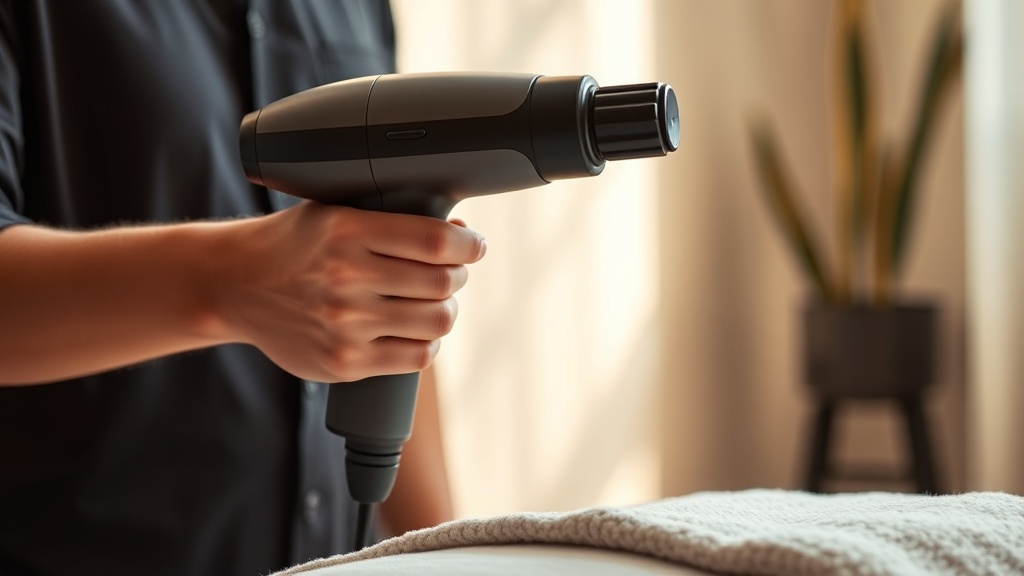
The Bob and Brad D6 Pro has quickly become a standout in the crowded massage gun market, offering professional-grade percussion therapy at a fraction of the cost of premium brands. With its powerful brushless motor and multiple speed settings, it delivers deep tissue relief that rivals devices costing two or three times as much. The inclusion of multiple attachment heads makes it versatile enough for everything from post-workout recovery to chronic pain management.
The spacing between speed settings on a massage gun determines how precisely users can dial in their preferred percussion intensity. Devices with only three settings force users to choose between significantly different intensities with no middle ground. Five or six settings provide enough resolution for most users to find their preferred speed for each muscle group. Beyond eight settings, the differences between adjacent levels become too subtle for most users to perceive.
Percussive therapy devices differ from vibration therapy devices in a fundamental mechanical way. Vibration devices oscillate at high frequency with very low amplitude, primarily stimulating surface-level nerve endings. Percussion devices deliver distinct, forceful strokes at lower frequency with higher amplitude, reaching deep muscle tissue. The D6 Pro is firmly in the percussion category, delivering therapeutic depth that vibration devices cannot match.
Chronic Pain Management Using Percussion Massage
Comparing the D6 Pro to the Theragun Pro reveals some interesting differences in design philosophy. While Theragun emphasizes its triangular ergonomic grip and app connectivity, the D6 Pro focuses on delivering raw percussion performance and value. Both devices offer multiple speed settings and interchangeable heads, but the D6 Pro achieves comparable muscle relief at a significantly lower price point.
Bob and Brad's D6 Pro review scores consistently emphasize the device's stall force, which measures how much pressure can be applied before the motor loses speed. A high stall force is essential for effectively treating dense, deep muscles like the piriformis, psoas, and deep spinal extensors. Budget percussion devices with low stall force simply cannot penetrate these areas regardless of their listed percussion speed. The D6 Pro's motor maintains its therapeutic output even under firm pressure against these challenging muscle groups.
Recovery Timeline: How Quickly the D6 Pro Reduces Soreness
The cumulative effect of daily percussion therapy over weeks and months produces tissue changes that cannot be achieved through occasional treatment. Fascial remodeling, neural adaptation, and vascular development are all time-dependent processes that require consistent mechanical stimulus. Users who commit to brief daily sessions, even just five minutes targeting their most problematic areas, consistently report transformative improvements after four to six weeks. This principle of consistency over intensity is perhaps the most important takeaway for anyone beginning a percussion therapy practice.
Best Techniques for Stubborn Knots with the D6 Pro
Sports-specific applications of percussion therapy extend to skill acquisition and motor learning, not just recovery. By reducing muscle tension and improving proprioceptive awareness before practice sessions, athletes may develop more efficient movement patterns. Tennis players treating the forearm before serving practice, pitchers treating the shoulder complex before bullpen sessions, and gymnasts treating the hip flexors before flexibility training all represent performance-oriented applications. The D6 Pro's quick startup and easy operation make these brief pre-practice protocols practical to implement consistently.
The acoustic signature of the D6 Pro at its lowest speed produces a gentle, rhythmic thumping that many users find almost meditative. This is markedly different from the high-pitched whine produced by devices with brushed motors or poorly balanced percussion mechanisms. The low-frequency sound is less intrusive and less irritating than high-frequency noise, even at equivalent decibel levels. This qualitative noise characteristic matters as much as the absolute decibel measurement.
Flexibility improvement through percussion therapy occurs via several complementary mechanisms. First, the mechanical vibration reduces resting muscle tone by decreasing neural excitability in the treated area. Second, increased local blood flow raises tissue temperature, making muscles more pliable and responsive to stretching. Third, the breakdown of fascial adhesions removes physical barriers to movement. Athletes who combine percussion therapy with static stretching consistently achieve greater range of motion gains than stretching alone.